Sunday, July 29, 2012

Olympic Village brand condoms

Why hasn't this been done yet?
Olympic Village Brand Condoms?
It could make condoms cool again!

Here's my suggestions for the ad campaign that I came up with in the last 10 minutes.


1. When you get home you want them to ask “silver or gold?” not “pink or blue?”

2. Don’t pass one of these tests:
Only to fail one of these:


3. Put a muzzle on your air rifle


4. Sometimes geopolitics is complicated:

 Sometimes it’s simple: 

 For the times when it’s simple.


5. After 10 pm in the Olympic Village, it’s time for the Synchronized Something Else


6. Because Rhythmic Gymnastics is more precise than the Rhythm Method.


7. Leave on this belt: 

Take off this one:


8. Because the World’s Fastest Man isn’t always the World’s Fastest Man. If you know what we mean.


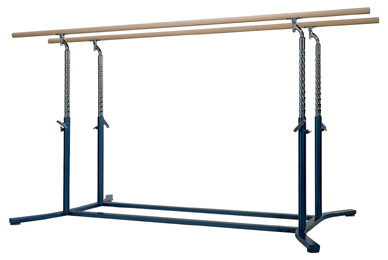
9. For the woman who's an expert at the parallel bars, not the parallel legs

10. 


11. In the Olympic Village, there's no need to pommel your own horse.


12. Because sometimes even the world's greatest athletes have a "false start"


13. Because there's another javelin event the public doesnt get to see


14. Bring home the gold, not the herp.

Saturday, July 28, 2012

Contrary thoughts on academic whining, part 2

Research today is solid but not pathbreaking: This is like, the most common whine I hear, and I hear it ALL THE TIME. There's no way to argue with it, just like there's no way to convince someone the world isn't going to end in November 2012. You just have to wait and see. It's a really stupid argument because the person making it has to convince you they know better than you what's really truly creative stuff. I just don't believe them. I suspect the research now is just as creative as it ever has been, if not more so, thanks to the faster exchange of ideas permitted by email.

Papers are shorter nowadays: This is a good thing. I'm in favor of shorter papers. People should write more efficiently. I hate old Journal of Neurophysiology papers with 10 numbered paragraphs in the Abstract. (Even if you disagree with me, have you considered that maybe people are splitting their papers up into smaller bites to increase their number of pubs, which is probably innocuous?)

"The picture we paint is, of course, stylized" - "We are just being whiny and we know it"

Modelling papers are replacing field-based papers: Or maybe the field research has produced so much data that the field of study can now support modelling papers? Why do you think they are replacing instead of augmenting?

"More papers focus on black-and-white analyses because there is no journal (or mental) space for nuanced discussions": I doubt this is true. It may be that people are picking up the NIH-style habit of couching their data in the framework of hypothesis-driven research.

But if there are fewer nuanced discussions in the literature, I bet some of those nuanced discussions are being shifted off-line towards in-person meetings, phone conversations, video chats, and emails. Conferences and lab visits are much cheaper and thus more common since airline deregulation in the late 1970's and the continued decline in airplane prices since then.

"Academics are increasingly busy with more papers, more grants, and more emails to keep the machinery going". While this line sounds like it comes from a Pink Floyd album, it is still from the same whiny paper. First of all, writing papers is fun, and if you disagree you are in the wrong job. More papers = more fun. More emails is a sign of increased efficiency. I can take some days and work from home because of email. It's made me much more efficient.

"The modern mantra of quantity is taking a heavy toll on two prerequisites for generating wisdom: creativity and reflection." I disagree with this 100%. First of all, everyone knows that the major pre-requisite for generating "wisdom" [which I will interpret to mean scientific knowledge] is improved technological methods, not more sitting around jerking off. Second of all, the fact that I can collect  more data faster means I can test hypotheses faster and learn more faster than before and make connections while the info is still fresh in my mind. If that results in more papers faster, so be it. I'll make them shorter so I can write more of them.

"Creativity suffers under excessive pressure" - true but it also suffers under lack of pressure. Just ask some deadwood tenured faculty in your department. There is an optimal amount of pressure.

Academics should live a good life, not be in a rat race: Uh... we should also have Phish Food for breakfast every morning, but not get fat. Who's in favor??


Contrary thoughts on standard academic whining

I don't usually read TREES, but someone tweeted this paper, and I wanted to give my thoughts. The paper isnt particularly bad, but it just summarizes in one place all the whines I see all the time, and puts them together in one place. I don't know the authors. I assume it was written by Grandpa Simpson.

I am a newbie in academia, just barely a 2nd yr assistant professor. Sprinkle salt liberally.

There is too much measurement in academia: I don't really see this. In my experience, people do measure h-index, number of pubs, etc, but then use this as one of many factors in making decisions. In my position, the person who got the offer before me (and turned it down, obviously), had fewer pubs in lower journals than me, but the department made the same choice I would have in offering her the job first: she had a better, more interesting, more creative narrative than me. I am also thinking of one department chair-ship I am privy to the details on, in which the administration went with the person who had fewer papers and lower h-index in part because of the perceived quality of the papers, and in part due to unmeasurable gut feelings. These stories are typical in my experience.

I suspect that measurement is often used as an excuse when people are rejected for other, qualitative reasons.

And I have to add in here: the opposite of too much measurement is not academic paradise. It's extreme nepotism. Ask someone who has worked in the Italian university system.

Researchers are judged by the amount of grant money they bring in: BFD. That's how universities make their money, in overhead. That overhead rains down on people who have less remunerative interests. The opposite of judging based on grant $ is no soft-money institutes, and much greater competition for the few slots.

Standards for productivity have gone up: The numbers they give don't make sense. Standard have quadrubled in a "few" years? What's a few, like 4-5? I dont know. I don't buy it.

I do have a theory though. I call it the neuropolarbear theory of academic titles.
It goes like this.
The names we used for academics 50 years ago (or whatever halcyon age you want to look back to) are different than the present.

50 years ago                 Today 
Grad student                 Grad student
Assistant professor       Post-doc
Associate professor      Assistant professor
Full professor               Associate professor

I bet that salaries on the right hand side are better for each category than they were 50 years ago.

Anyhow, even if standards have gone up, this needs to account for the increase in startups and salary that support those increasing standards.

"This volume of papers is attained via large laboratory groups and research consortia, which in turn require massive amounts of funding". So more money is being put into the system and more papers are coming out. Why is this bad?

[To be continued in part II]


Thursday, July 26, 2012

Google scholar is the Piratebay of pdf's... why are they still in business?

Several years ago, Piratebay realized something brilliant.

If they stopped hosting torrents, and just made themselves a search engine for movies and music, they were immune to being shut down.

Of course, we all know that the government wised up to that and through some legal means that I don't understand decided that search engines could be liable for content they did not host.

This sucks, but regardless, the important point is that Google Scholar is doing the same thing sof PDFs.

Somehow, they go through all the PDF's on the internet and link them up to pointers referring to the articles, so when I search for, let's say "The Psychology of the Fruit Machine: The Role of Structural Characteristics (Revisited)" [as I was doing about 10 minutes ago], it's there for free on Google Scholar. 


But it would be $34.95 on SpringerLink!!!


Google Scholar just saved me $34.95. Yay!


Why isn't Springer suing their pants off?


How can this be legal?


I'm not complaining. Quite the opposite. Just, it's seriously the piratebay of PDFs. 


Oh and in my opinion, #icanhazpdf is the same exact level of quasi-legality. Actually, #icanhazpdf would seem to be even more legal, since in that case at least it's your own tweeps sending you the document, not the all-knowing power of google.


Speaking of which, does anyone ever pay for journal articles ever??? I can't imagine someone - anyone - putting down $34.95 for one paper. Especially when, about half the time, it's free about 5 clicks away on google scholar.


Monday, July 23, 2012

Being a professor is easier than being a grad student

I have been an assistant professor for one year now. And thinking about it today, I realize it's a lot easier than being a grad student.

True, I work a lot harder than I did as a post-doc, and that involved working harder than grad school. I do of course accomplish a lot more daily. There is definitely more stress and anxiety - more people depend on me, and the amount of time I have to succeed seems shorter. As a professor the number of different skills I am called on to use is greater, and the deadlines are shorter. I work more hours more consistently, and I have watched a lot less television (still a couple seasons behind on Fringe).

But given all that, it's easier being a professor.

The reason is, I now have confidence that I can do it.

When I was a grad student, I had no guarantee that I would ever be good at science. I wasn't sure my work would pay off so it was harder to do. I was at the bottom of the learning curve and every step was new and different.

Even the new things, if I fail at them, I still have the other things to count on as backup. I didn't have that in grad school. I just had a college diploma. And it was like that thru most of grad school. I didn't get any publications until right before I graduated, and I didn't even do an SFN poster until 4 years in. I was off in the wilderness and I had no external validation from the field. I was on the outside looking in, and there was no clear way in. That's a really hard and draining place to me.

Based on my own experiences, I do think that confidence in one's ability to achieve one's goals (known to social psychologists as self-efficacy) is one of the biggest factors in determining motivation. And motivation can determine success. 


If I believe my grant may be funded, I will work on it until 2 am; if I believe it's a crapshoot, I'll submit a half-baked one. If I believe it probably won't be funded, I'll spend the afternoon reading slate.com.


I gained a big boost when I got my Ph.D. Then I really felt like "no matter what, they can't take this from me." When I got a couple publications, I could look back and say, those are in the scientific literature forever.

I try to remember this in my mentoring. I try to give more sympathy for the students than I would be inclined to. I think it might make the difference. I know for me back in the day having an advisor who could provide some validation kept me going through the roughest spots.


I knew it!

A year ago, everyone was wondering if Mittster could be the Republican nominee.

They said, "He's a Mormon and there is no way the fundamentalism Christians will vote for a Mormon."

I said, "They will happily vote for a Mormon. It won't even be an issue"

I just want to say, I was totally right.

It's less than 4 months to the election, and the Mormon thing hasn't come up at all. And I follow the election pretty closely. I'm sure that there are some whiny fundamentalists out there, but seriously, they seem to have called a truce. 

Not that I am right about everything. I predicted that his candidacy would cause the Fundies to change their tune on Mormons and finally admit they are regular protestants. That doesn't seem to have happened. 

Also I really though Perry would not be as totally dumb as he was. And I thought Huntsman would do better too. And I thought Palin would run.

Saturday, July 21, 2012

It's ok to go slow on online teaching

The president of UVA was removed in part for going too slow on the move to online teaching.

(She was later reinstated for other reasons).

Everywhere you turn, someone is freaking out about missing the bus on online teaching.

That's because everyone can tell there's a good chance it's going to be big, and there's a good chance it's going to change everything for all of us in academia.

I think it's good that everyone is eager to support innovation in pedagogy. But I think there's not much to worry about, even if things do change a lot. 

I think people look at Google and Bing and think, Google is ingrained and while Bing is just as good, and now Bing can't get traction. The same with Facebook and G+. There are some technologies where you gotta get in on the ground floor and then the attractor state is so strong that no one will switch.

But I think education is not that thing. And the reasons is that the teaching isnt really what people pay for. It's the broader experience, plus the accreditation.

Thus:

I think there's very little cost to being slow on internet teaching. In the future, teaching will be run by specialized firms that are orthogonal to universities, and that rent out their services. It will be more like the textbook industry than the search engine industry. The lecturers for each lecture will be the best lecturers. Look, for example, at The Learning Company, which takes the best lecturers from anywhere.

There are already a jillion universities joining Coursera and some other online lecturing websites.

I highly doubt that any of our nation's 100 most prestigious universities will ever allow anyone to get a degree without living on campus for 8 semesters. The lectures will let the professors "flip the classroom" (as the kids say today), and with lecturing as homework and homework done, with professorial help, during class. The lectures will be seen as the cart and the classroom stuff will be the horse.

If you think about it, interactive pedagogy is a lot more appealing to most academic professors anyhow. That's what grad school is like.

Not that it affects my life anyhow. My university has chosen to move slow on this issue anyhow. Some faculty I know have made moves to goad the admins along but, apparently, to no avail. They can wring their hands all they want, I'll be sitting here in my comfy chair, drinking lemonade.